
Some kitchens feel perfect on day one, but over time, they can start to feel tied to a specific trend or era. Most of the time, that shift doesn’t come from one big choice; it’s the accumulation of smaller decisions that lean a little too hard into what’s popular instead of what truly lasts.
Timeless kitchens tend to work differently. They don’t depend on one standout feature to carry the space. Instead, they rely on a set of choices that feel steady together, even as everything around them changes. When those decisions are thoughtful from the start, the kitchen doesn’t need much convincing to stay relevant.
Color That Gives You Room to Breathe
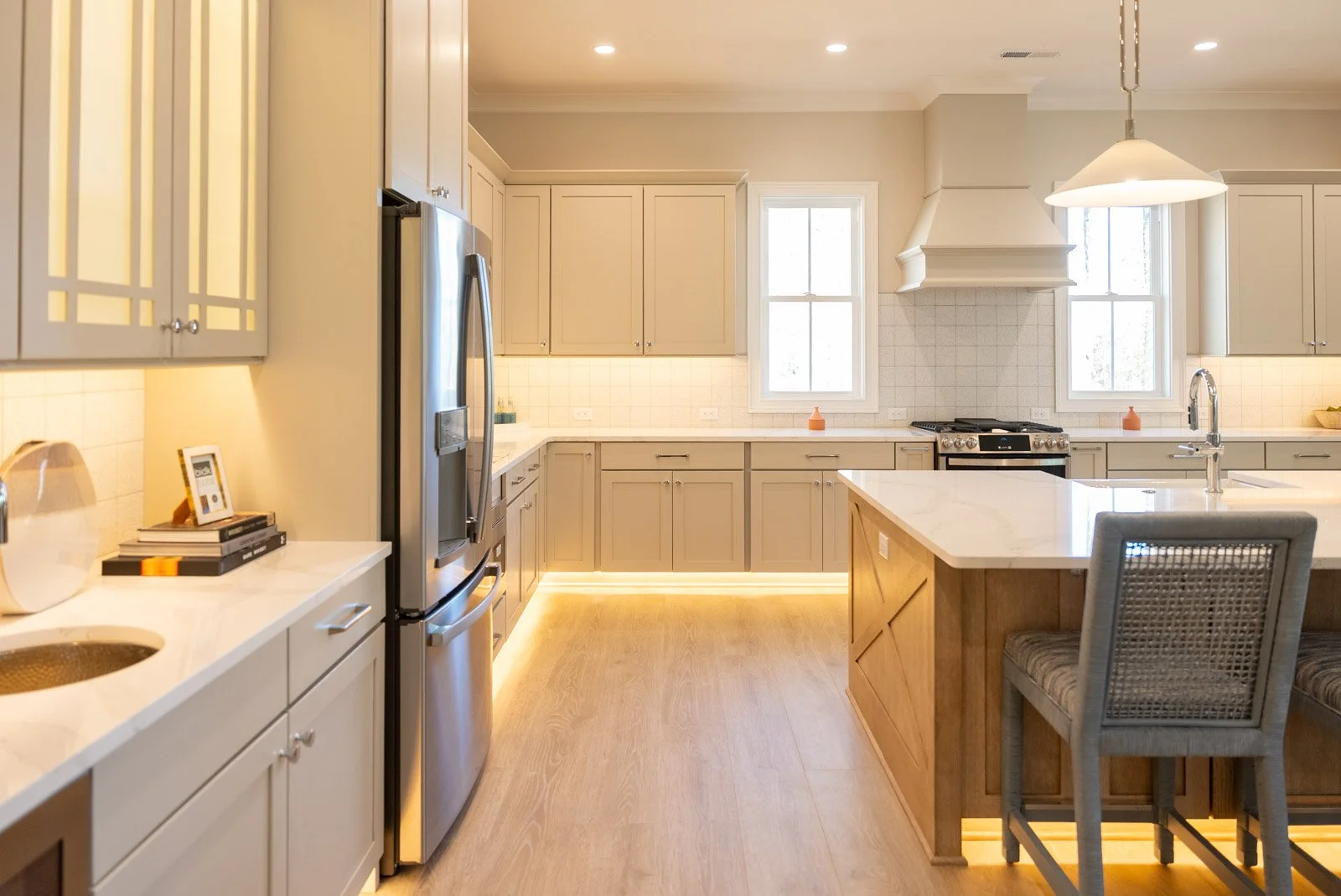
Color is usually where everything begins, but it’s also where kitchens can accidentally lock themselves into a look too early. The goal with a timeless palette is flexibility, not limitation.
Whites are still a go-to because they keep things open. They let light move through the space and give cabinetry detail room to show up without competing for attention. They also make it easier to shift accessories or accents over time without feeling like the room has to be reworked.
Warm grays and greige tones sit in that same reliable category, just with a little more softness. They bring in warmth without pushing the kitchen too far in one direction. Navy tends to work best as a supporting player rather than the main event, just enough depth to break things up without taking over the palette.
Wood tones are where things really ground out. White oak, rift cut oak, walnut. Each one brings a bit of variation that keeps painted surfaces from feeling too flat. It’s not about contrast for the sake of contrast, but about keeping the space from feeling too one-note.
Cabinetry That Stays Seamless
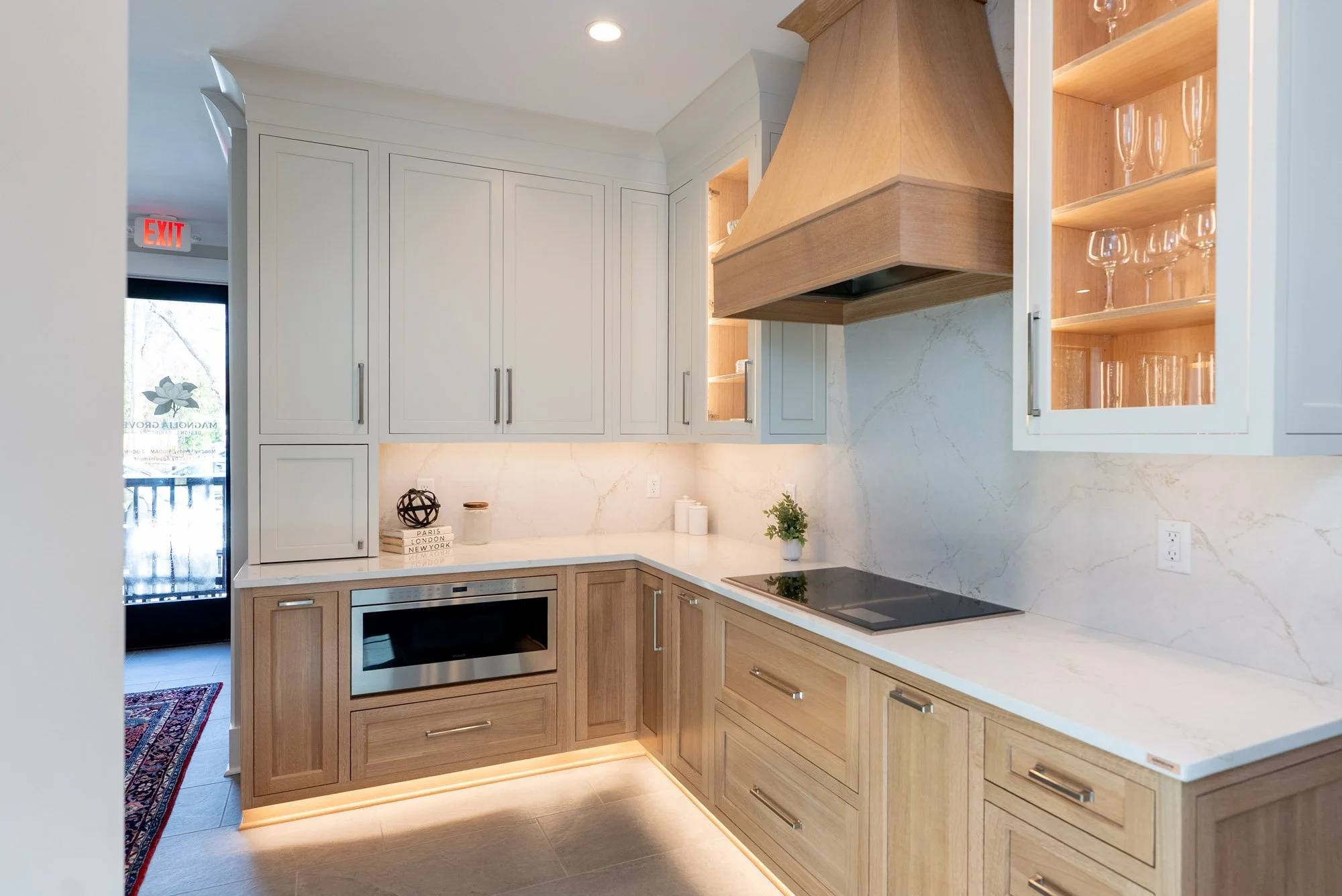
Cabinetry sets the visual structure of the kitchen, which is why its design language matters long after installation. Timeless cabinetry tends to avoid ornate detailing or overly stylized profiles in favor of clean, balanced forms that feel intentional.
Inset cabinetry is one of the more refined approaches, where the doors sit within the face frame of the cabinet. This creates a tailored, furniture-like appearance that feels built into the architecture of the space rather than simply applied to it. It’s a detail that reads subtle but adds a level of precision that holds up over time.
Shaker cabinetry remains widely used because of its simplicity and proportion. The recessed panel and defined frame provide structure without adding visual noise, which allows it to adapt across a range of kitchen styles without feeling tied to one specific design era. Full overlay shaker styles take that simplicity further by reducing visible framing and creating a smoother overall surface, which can help the kitchen feel more streamlined.
Hardware That Holds Its Place Over Time
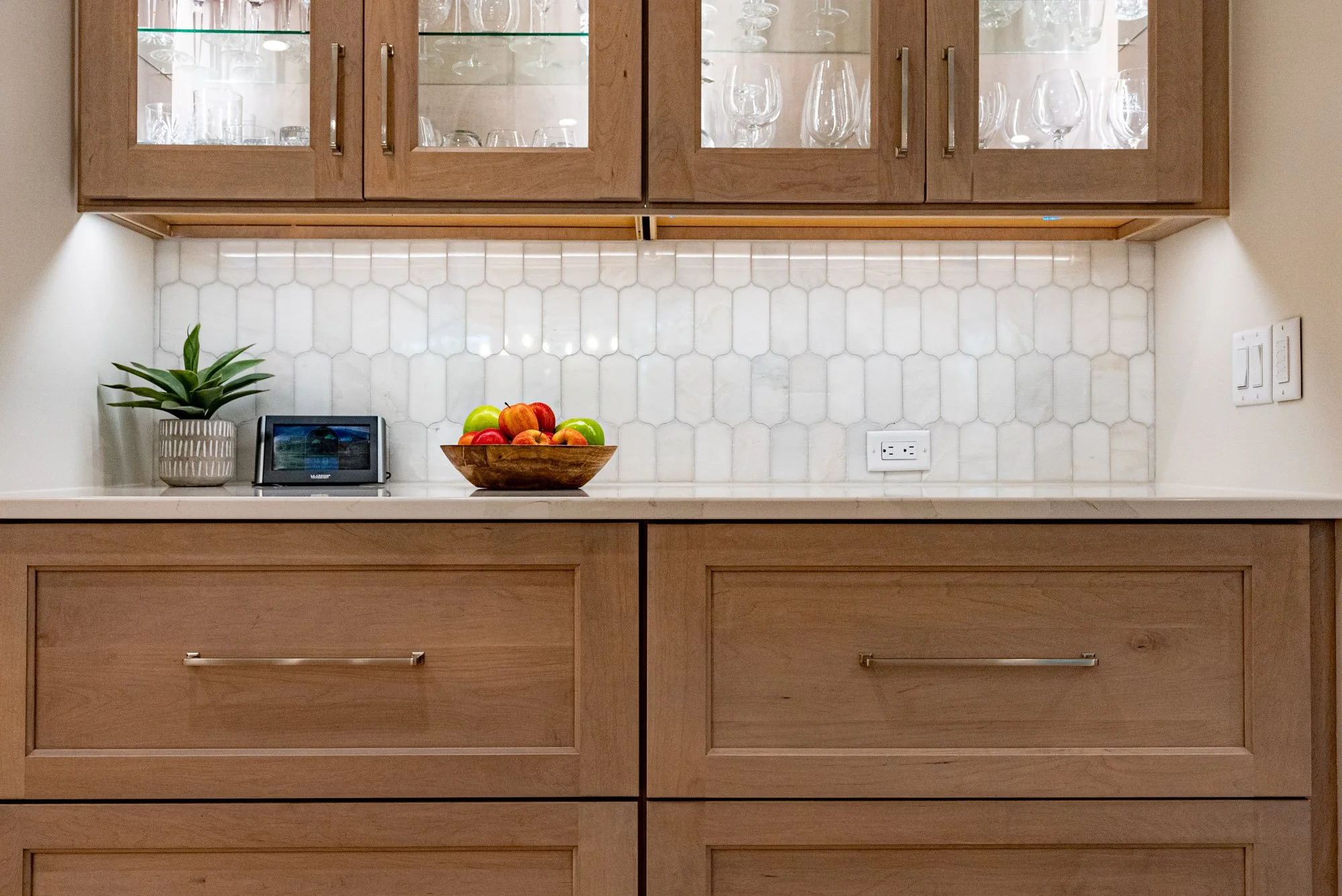
Hardware is often treated as a finishing detail, but it plays a consistent role in how the kitchen is experienced over time. Because it is one of the most frequently used touchpoints in the space, its finish and weight contribute more to the overall feel than it might initially suggest.
Satin nickel is a steady choice because it just blends in. It doesn’t fight the cabinetry or pull the eye in too many directions. Oil-rubbed bronze brings in a little more depth and works especially well when the kitchen leans warm overall. Aged brass is somewhere in between. It adds warmth, but in a softer way that doesn’t feel overly polished or too “finished.” Over time, all of these finishes tend to age in a way that feels natural instead of distracting, which is really the goal.
Backsplashes That Don’t Try Too Hard
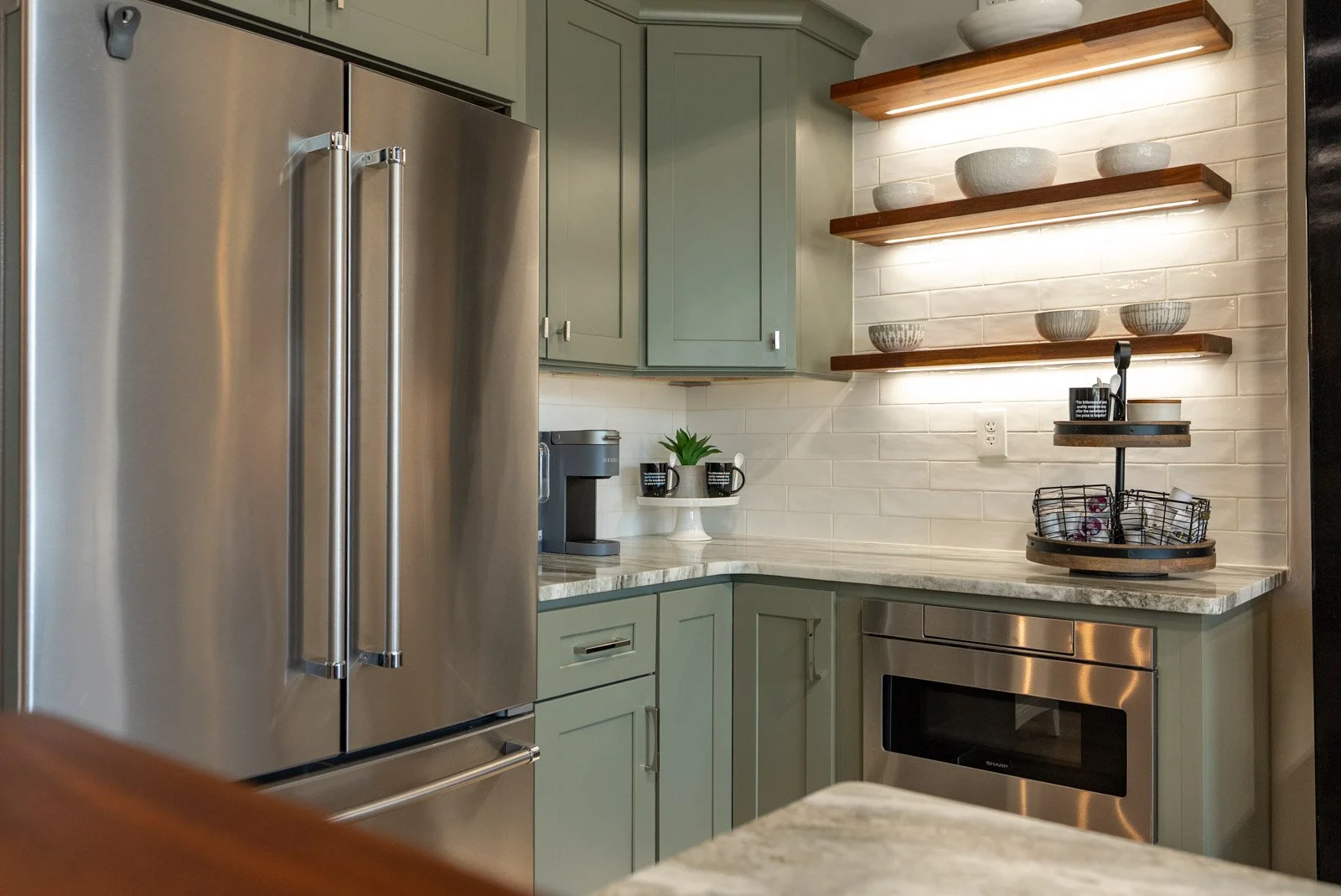
Backsplashes can easily become the loudest part of a kitchen if you let them. In kitchens designed for longevity, they are more effective when they support the space rather than lead the space. The goal is to maintain balance between cabinetry, countertops, and surrounding finishes without introducing a competing layer.
Subway tile continues to show up because it just works. It’s simple, predictable in a good way, and doesn’t dominate the space, which helps it remain relevant allowing other design choices the opportunity to shift.
Mosaic tile can also work in a timeless setting, but it typically functions best when used sparingly and with intention, where texture is more important than visual impact.
Neutral tile choices are often the safest long-term move, not because they’re boring, but because they don’t lock the kitchen into a specific moment. Like subway tile, they let other decisions carry the personality.
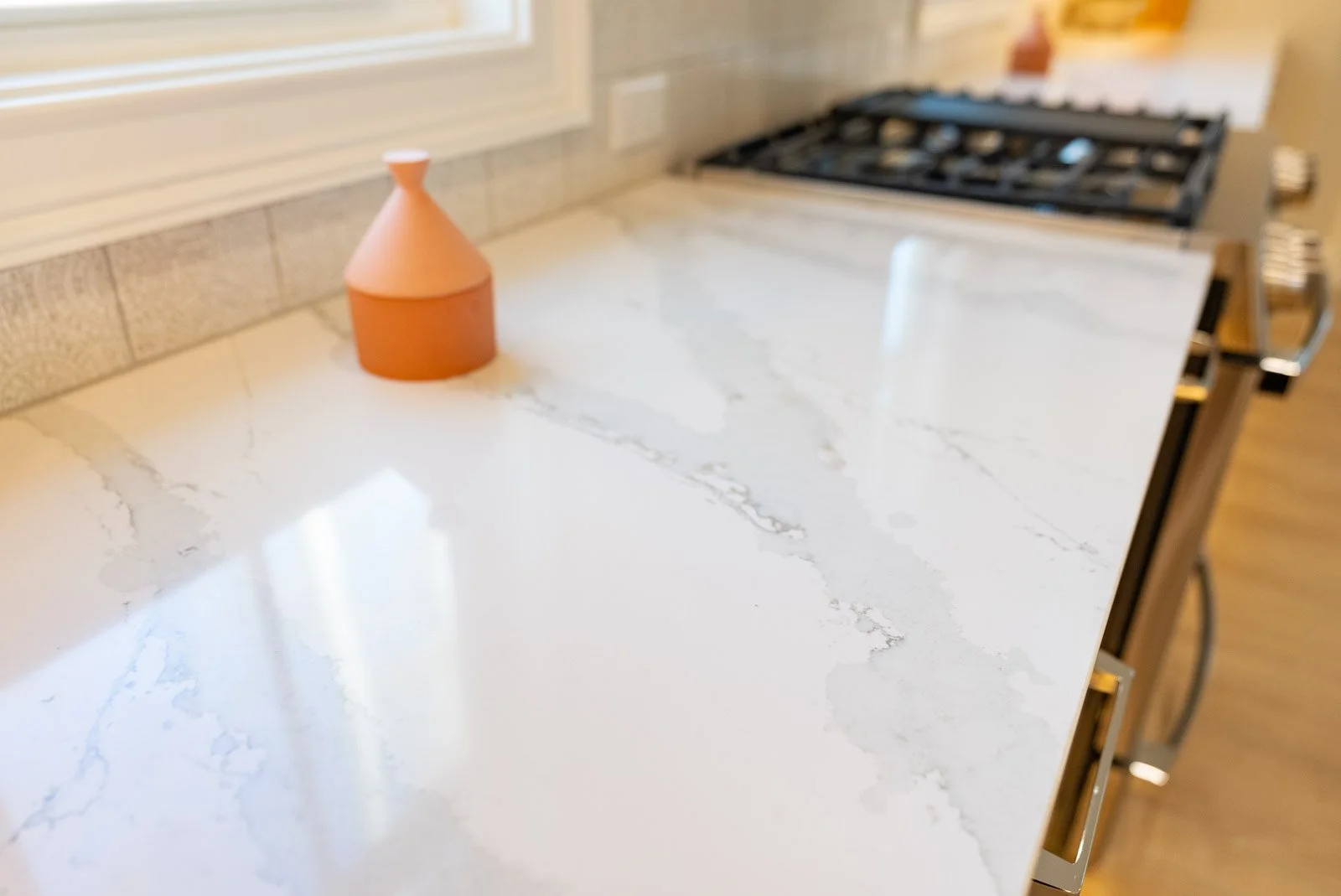
Countertops That Get Better the Longer They’re There
Countertops take a lot of use, which is probably why the materials that hold up best tend to be the ones that already have some natural variation built in.
Soapstone is a good example. It starts off soft and matte and slowly develops character as it’s used. Instead of resisting wear, it absorbs it in a way that adds depth to the material. Marble has been around forever in kitchens because of its movement and natural variation. While it requires more consideration in application, it remains a reference point for timeless design.
Quartzite sits in a nice middle ground. It has the look of natural stone but brings more durability into the mix, which makes it a practical option without losing visual depth. Wood countertops, such as walnut or oak, bring warmth into the mix in a way that stone can’t quite replicate. These materials tend to age into themselves rather than out of relevance, which is part of what keeps them consistently used in long-term design planning.
A Kitchen That Doesn’t Need Constant Reworking
The kitchens that age well aren’t the ones packed with the most ideas. They’re the ones where the ideas actually work together. When color, cabinetry, finishes, and materials are chosen with a bit of restraint, the space doesn’t need to be rethought every few years. It just holds.
That’s really the goal with timeless design. A kitchen that feels good when it’s finished, and still makes sense when life moves around it year after year.
If you’re looking to create a kitchen that lasts through changing seasons and styles, we’d love to help you create a space that feels just as right later as it does today. Reach out through the button below or by visiting the Magnolia Grove Design Studio at 2305 Market Street Wilmington, NC 28403!
